
The Name of This Band is R.E.M.
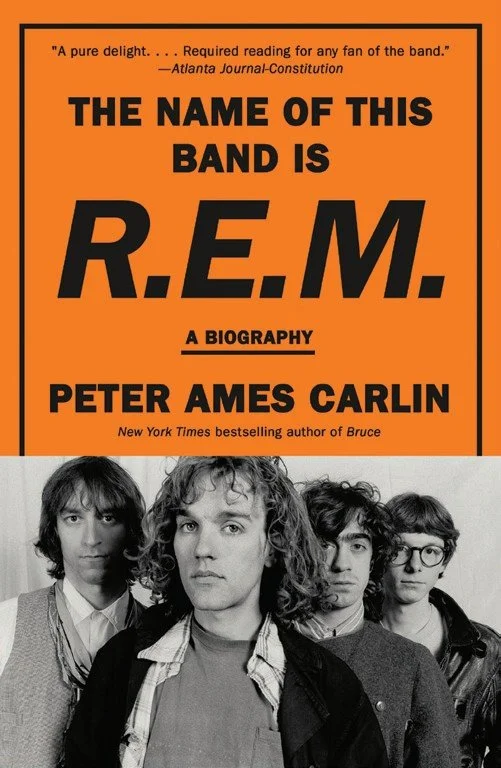
The Name of This Band is R.E.M.
A Biography
by Peter Ames Carlin
Doubleday 2024; 450 pages; $42.00
Reviewed by Mark Anthony Jarman
Murmur is my favourite R.E.M. album. In 1983 I was living illegally in Seattle and bought the cassette. It was a murky pleasing surprise, jangly Rickenbacker 12-string electric, and vocals not unlike Gene Clark, my favourite Byrd, but the tape had an undertow that was newer, odder. That first album still seems magic. The writer of this book, Peter Ames Carlin, anticipates fans like me and has a chapter called Murmurers, aimed at those doubters who prefer early to later.
Their later career was very good. But a question haunted fans and band: can you stay indie and non-commercial, while selling millions of units? R.E.M.’s progression is fascinating: a mysterious DIY band on college radio, playing tiny clubs in Athens, Georgia, mocking rockstar tropes (Hello Cleveland!), and refusing to make commercial videos. They came out of art school and record store jobs, but somehow became rockstar millionaires, videos in hot rotation on MTV, stadium shows in Europe and Asia. In the 450 pages of this well-researched tome, Carlin details every phase of that strange ascent, talks to every producer and engineer and record exec and significant other.
The book has a fly on the wall feel. The boys liked Flannery O’Connor, and their first gig party in a ruined church. The four were smart early, splitting songwriting credits evenly to avoid later conflicts and lawsuits over who wrote what. Producer after producer begged Michael Stipe to sing clearly; the lyrics are good, drop the mumbling (I kind of like the mumbling). With a small label, IRS Records, Stipe resisted producers, resisted videos, refused to lip-sync. But later, with Warner brothers, he embraced clearer vocals and made shiny happy videos. Too late for their first label. A frustrated IRS exec, watching their mega-success, shook his head and moaned, “Give me a fucking break.”
The details keep coming. Stipe’s father was a chopper pilot in the Vietnam war; the song “Orange Crush” may be about that. For variety, they start playing different instruments, keys, or electro-mandolin on giant hit “Losing My Religion.” Drummer Bill Berry collapsed from a brain bleed while playing onstage. He recovered quickly, but eventually left to spend more time with his tractor (ha). For a period, R.E.M. was a trio; it wasn’t the same.
The book has good photos. Embarrassing grade school pics, guitarist Peter Buck with his twin daughters, bassist Mike Mills slowly going glam, bill riding his tractor, but the best is Stipe circa high school, posing for a big-hair rockstar fantasy wearing an open black kimono, hairy chest, and silver lamé pants borrowed from friend Melanie.
I thought I might skim, but I read every page. Carlin delves into LPs like New Adventures in Hi-Fi or Monster, songs “belong” or “Near Wild Heaven,” and I wondered, How does that one go again? Have the songs ready as you read.
Carlin lapses into grandiose claims to end some chapters. An early trip to NYC by Stipe affected the development of “all pop culture of the 90s.” Their album Out of Time led to grunge and may have caused the defeat of one president and election of another (Bush and Obama). I’m not convinced.
R.E.M. split up several times, but still seem to love each other, it’s “amicable.” A young Michael Stipe wished for fame and success and got his wish in spades. But during sessions for their last album, Collapse into Now, the singer said, “I need to be away from this a long time.” Guitarist Peter Buck nodded and said, “How about forever.”