
Born Sacred: Poems for Palestine
Born Sacred: Poems for Palestine
by Smokii Sumac
foreword by Zaynab Mohammed
Roseway publishing, 2025; 178 pages; $27.00
Reviewed by Natasha Sanders-Kay
The first poem in this collection was born in the immediate aftermath of October 7, 2023, during the initial escalation of Israel’s genocide against Gaza. As the genocide continued, so did the poet. The result, 100 poems for Palestine written between October 2023 and April 2024, is a moving work of solidarity. Smokii Sumac illuminates transcontinental colonial connections through the lens of a Ktunaxa Two-Spirit, neurodivergent, sober writer, teacher, student, uncle, and community member. Born Sacred: Poems for Palestine was written as they “worked through all the feelings that came along with being a survivor of genocide, while witnessing genocide happening in real time across the world.”
When Sumac learns of shrouds being sent to Palestinians to cover their deceased, he recalls the body bags sent by the Canadian government to Indigenous people dying of swine flu. Following a temporary ceasefire, he reflects: “the truce / has ended // like treaty / it didnt really mean / much / in the end / anyways.” Parallel after parallel emerges between colonization of Indigenous peoples of Turtle Island/North America and of the people in Palestine.
The poems are tight in form, each a page or two, usually with two columns per page, and frequent line breaks. This works well, as the painful subject matter cries for some sort of container. The thin vertical shape of the poems (and lack of titles) also evokes the horrendous continuity of a genocide that feels never-ending. The short lines contain the trauma without diminishing it, conveying that the horrors at hand are so severe that they can only be spoken of in small, syllabic servings. While Sumac is spare with punctuation, there are plenty of question marks as he asks “how do so many / look away? […] how do we / go on?”; “when i teach / about / ndn time / i teach that / time isnt real / that // everything / happens / when its supposed to // how can I teach that / today?”.
Sumac is explicit about the impacts this genocide has on their health, writing frequently of exhaustion, anxiety, panic attacks, depression, chronic pain, illness, and grief. Palestine is ever-present on their mind as they cook, run errands, answer emails — and as he savours precious moments, like snuggling pets, sitting in the yard, his husband blowing them a kiss goodbye for the weekend.
Rest is a prominent theme in this book, with some poems referring to breaks in the writing process, and to prayers that Gazans may know rest. I appreciate Sumac’s honouring of the interconnectedness of self-, collective-, and community care, how crucial rest is in order to sustain all of that, especially for people already carrying the weight of colonial trauma.
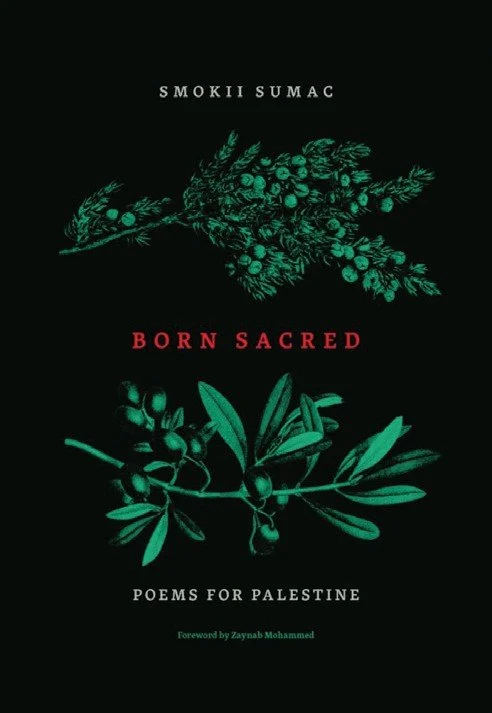
Even the design of Born Sacred offers the reader a sort of rest as well: the two branches that adorn the cover — one juniper, one olive — reappear on their own pages as poetic pauses interspersed through the collection, perhaps in which to breathe, pray, reflect (juniper trees hold deep cultural and spiritual significance for both Ktunaxa and Palestinians, as do olive trees in Palestine, each symbolizing resilience and more).
Humble, human, and heartbreaking, this book is a deeply felt journey through despair, hope, despair, and back to hope. It’s a testament to prayer, action, and poetry, to the importance of using our voices while others are silenced and murdered. Just as Sumac illuminates threads between colonial violence in Turtle Island and in Palestine, he also offers entwined ways of resisting, healing, and truth-telling. This is beautifully and devastatingly done in poem #20, which revisits the Ktunaxa Statement of Reconciliation initially shared in the preface, positioning it alongside three counts of a quote by journalist and writer Tareq Hajjaj:
Keep my stories alive so you
keep me alive. Remember that
I wanted a normal life, a small
home full of my children’s laughter
and the smell of my wife’s cooking.
Remember that the world that
pretended to be the saviour of
humanity participated in killing
such a small dream.