
Dead Heat
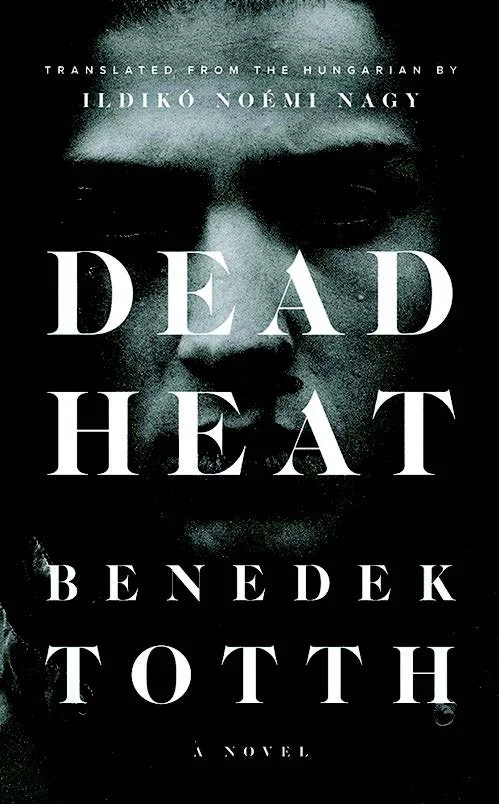
Dead Heat
by Benedek Totth; translated by Ildikó Noémi Nagy
Biblioasis, 2019; 256 pages; $21.95
Reviewed by Andrew Murray
I am no expert in Hungarian literature by any means, but I am willing to wager I’ve read more Hungarian novelists (Sándor Márai, Magda Szabó, György Dragomán) than the average Canadian, and one of the first things to strike me about Benedek Totth’s nihilistic satire Dead Heat was how it could be set just about anywhere, with its McDonalds, its Grand Theft Auto, its generic club music. There is nothing particularly Hungarian about this book, it seems to me, but I’m not sure whether that’s a consequence of Totth’s choices or cultural imperialism.
A literary phenomenon in its home country, Dead Heat appeared in Hungary in 2014 but the English translation only arrived in late 2019. The story of a group of hateful boys linked by their membership on a swim team, it’s a wrenching, violent, misogynistic odyssey. It’s also strikingly banal and often boring, one of those books that aims to shock but that no one will talk about in 2022, let alone over the longer term.
Our narrator is an apathetic teenager caught up in an aimless existence. He is the sort of person who begins a lot of anecdotes with “a buddy of mine,” and then tells a story it’s very hard to credit. To wit, “this one time, a buddy of mine fell under the train and the wheels cut his legs off. He died too, though he was a pretty good guy.” It’s difficult to trust him, difficult to invest oneself in him as our guide. Indeed, one wonders whether one should care when the narrator of his own story is so openly uninterested in it.
Apathy is coupled with vapidity. Here is a typical insight: “Half an hour later, we’re hella smashed. Eyeing chicks. Things start picking up. The more wasted we get, the hotter the chicks get who come over to us. That’s always how it goes.” Not only would this wisdom seem below the standard of even a poor ya novel, it’s also notable for its laboured use of slang. I lost count of how many people “shit bricks” or say “dafuq you talking about?” Was it Lou Reed who advised writers to avoid slang because it dates their writing? Totth was not listening, and that is another reason why it’s hard to see this book lasting. I don’t envy Nagy’s task as translator, either.
Dead Heat is full of references to pornography and its female characters are depicted as disposable and interchangeable, useful only for sexual reasons. A peculiar insistence on violence directed at animals is present, too. Totth seems to have been inspired by “bad boys” of American fiction like Bret Easton Ellis (American Psycho is an obvious influence) and it is true that this book rockets along and resolves itself in only 250 pages. Call it a fast journey, but not an interesting or worthwhile one. »