
Pivot Point
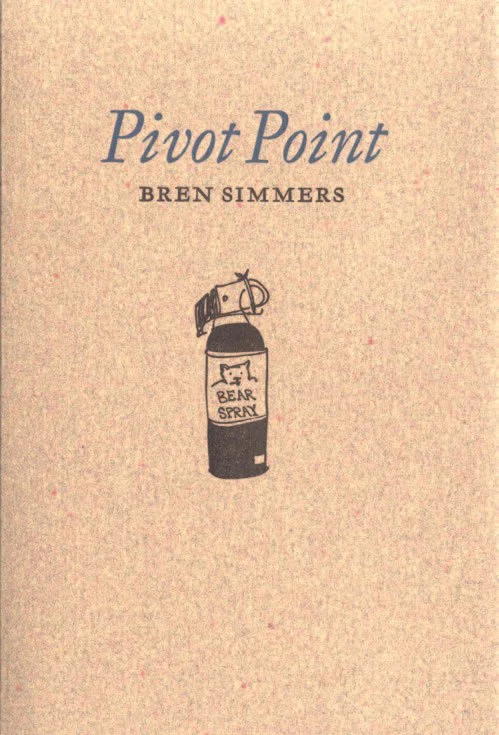
Pivot Point
by Bren Simmers
Gaspereau Press, 2019; 112 pages; $24.95
Reviewed by Jessica Key
Bren Simmer’s first book of non-fiction, Pivot Point, recounts the nine-day canoe trip she embarks on with her husband and two close friends and their families through the Bowron Lakes Canoe Circuit in British Columbia. The nine days are documented as if in a journal: each day is broken down into a short narrative, with poems interweaved through-out. While the chapters themselves are short — as are the poems, and even the book itself — the topics it covers are as vast and interesting as the wilderness.
Friendship, aging, imposter syndrome, fear, relationships, work, nature, and mindfulness, all play roles in the way the story unfolds. From the beginning, as they embark on their canoe journey: “With each stroke, notice tight shoulders and hips — all the emotions stockpiled for a later date.” over the nine days, these emotions are explored — sometimes indulged and sometimes put happily to rest.
Gaspereau always makes gorgeous books, but this one is particularly so, due to Emma FitzGerald’s illustrations. As pen drawings they appear sketchy and deceivingly simple in being monochromatic. However, the details in them add to and reinforce Simmer’s words. For example, there’s not a generic magazine, it’s The New Yorker, and these are the kind of people that bring Scrabble on a canoe trip. In a panoramic view of them all playing in the water, she didn’t neglect the minutiae of bugs landing in their beverages while they are away.
At the centre of the book, it’s as much about friendship as it is about wilderness. Simmers’ experience of feeling drift in her friendships is one that is wholly relatable to anyone as they age: “How can I miss my friends, when they’re right in front of me.” Lives diverge, whether through geography, through different priorities re: careers or children, or through conflict. Both the discourse and the appreciation that comes through throughout the book is important commentary on those feelings. Simmer’s experience as an introvert sometimes felt foreign to me, but I also found it interesting, as she mentioned early in the book “You don’t have to know the names of trees to enjoy hiking through the forest.” The wilderness seems like a place perfect for introspection and mindfulness, and yet, she found herself constantly surrounded by people — both her companions and other travellers. Indeed, when talking about sharing their campsite, she mused “When will I learn to see allies first, not enemies.” These moments of introversion highlighted her relationship with her husband as well, when he checks in on her in their tent while others are playing Scrabble; he understands her need for alone time and leaves her with only a kiss on the forehead.
This is a book far more about friendship than romantic love, but one of my favourite lines in it was “Marriage is like a three-legged stool: you, me, and us. So long as all three legs are equal, the stool is sturdy. If we fail to take care of one, the stool wobbles.” To me, it straddles the perfect balance of romantic and pragmatic, and with only that line, it tells me so much of Simmers’ relationship with her husband, even while acknowledging that relationships all have difficulties. Like when, earlier in the book, they give another couple space while they bicker: “Animals, we give clues when threatened. bears snort and clack their jaws, skunk stamp their feet, killdeer offer up a false broken wing. Sarcasm, why don’t you do it then, warns of an impending charge. Tears — defense of a vulnerable spot.”
Even were it not for the poems interspersed throughout, you would still be able to tell this is a book written by a poet, when: “blades dip into the deep emerald surface we’ll be reading for days.” Further, like many books of poetry, much of the book is held in conversation, be it with other poets or with naturalists. These quotes and insights that are peppered throughout help give a greater understanding not only to the wilderness, but also the author’s interactions with both it and their companions.
When Simmers’ surveys her surroundings, she says: “When immersed in wild places like these, the mind expands to fill the space around it” and I think that’s true of this book as well. »